About Us
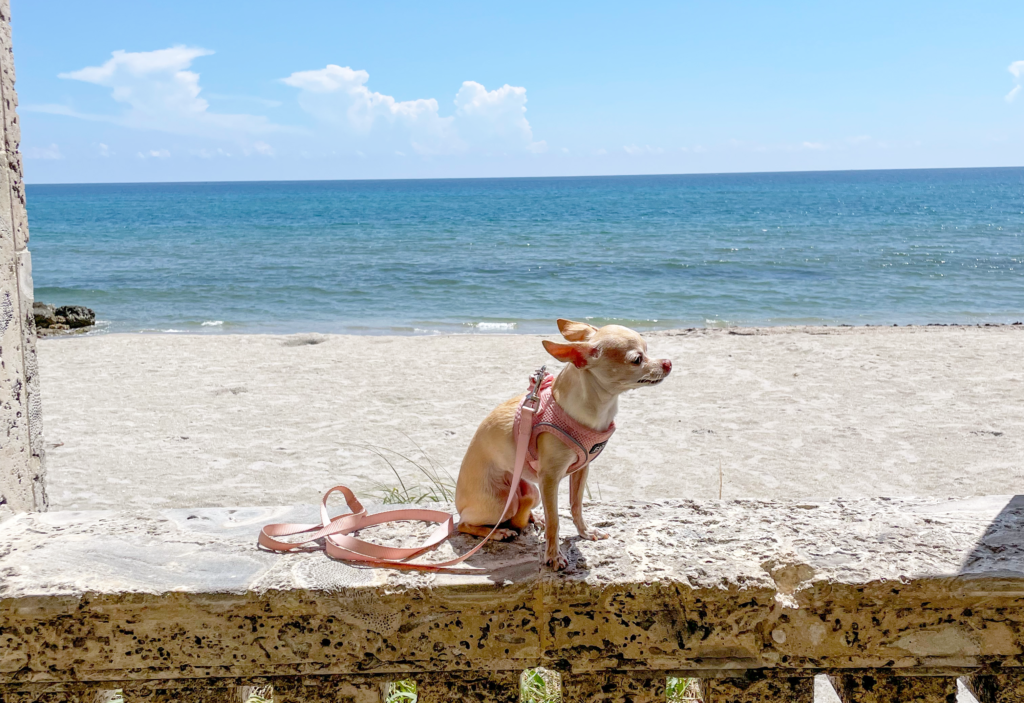
Who are we and who is Edie?
Disclaimer: I am not a professional or a medical expert, everything on this website is for informational purposes only and we are not liable for any issues with your dog’s health
In June 2022 my beloved 4 pound Chihuahua named Edie was about to turn 10 years old. A few days before her birthday she saw her vet for what I thought would be a non-eventful appointment. He had said she had a heart murmur and should get an echocardiogram done due to her age. I did not think a heart murmur was a big deal and really thought nothing of it. So when he called me on a Friday evening, I was shocked and terrified when he said she had a grade 4 heart murmur and needed to start medication immediately. I spent the entire weekend crying and researching what this meant. Hearing that she could go into congestive heart failure had me terrified. Everything I read about that was awful and it did not sound like a good prognosis.
I got used to giving Edie her medicine (vetmedin) twice a day. She experienced no negative side effects and seemed to be doing well. I became less worried but still paralyzed by information overload when I would occasionally research heart disease. Just when I was feeling pretty good about her diagnosis, in October 2022 she started coughing on a Sunday night around 9 PM. I had read about coughing being related to her heart disease but I still did not quite understand why she was coughing or what was happening. All I knew was that she seemed scared, anxious, and her cough sounded terrible.
After sending a video of her cough that night to my mom, she immediately called me and she she thought I should take her to the emergency vet right away. That had me even more concerned. I drove her to the emergency vet while talking to my mom and crying. When we got her to the emergency vet they said she may have fluid in her lungs, but that she was OK to wait until the morning to see her regular vet so that I could avoid an overpriced X-ray. The next morning I took her to the regular vet first thing in the morning, having barely slept and feeling completely disassociated.
Her vet suspected fluid in her lungs and gave her a shot of Lasix (a diuretic medication I would later become very familiar with). He took her X-rays and would confirm a few days later that her X-rays did show fluid in her lungs. I still was not quite sure what this meant, but I knew it was not good that her heart disease had progressed within 4 months.
After hearing this diagnosis I fell down a rabbit hole of researching all things heart disease and congestive heart failure. I could not quite get myself to say the words “congestive heart failure” as I could not accept it. She saw a cardiologist a few weeks later (I was also not aware that cardiologists existed for dogs). They added a third medication for her, Spironolactone. She was already on Vetmedin and Furosemide (Lasix). I became very nervous about all these medications on her tiny body. I knew they were necessary, but I had also read that many dogs who went on Furosemide wound up eventually in kidney failure, because diuretics are very hard on the kidneys. The cardiologist told me that the “textbook” life expectancy once a dog goes into congestive heart failure was 12-24 months, but that was if the medication did not work well. If the medication did work well, it could be longer. I still could not quite grasp this and didn’t even really tell anyone that she was given a “life expectancy”.
Edie’s cough improved once she started Furosemide, as it was eliminating the fluid from her lungs. Everything I had read, seemed to say that once they had a cough, they always had a cough. I was constantly reading posts in Facebook groups, googling supplements and alternative treatments for congestive heart failure. I took Edie to several vets including a Chinese Herb Vet, a holistic vet, a homeopath, we did a Zoom consultation with Dr Judy Morgan, she tried acupuncture, and I started cooking her food. I got her on countless supplements I had researched.
From October to about February 2023, her cough had basically disappeared. She went from coughing a few times a day, to once a day, to a few times a week, to once a week, to occasionally, to basically never. She saw her cardiologist again for a 6 month check up in April of 2023 where they confirmed she was very stable, and her left atrium had very slightly shrunk. I was ecstatic with the news. She had energy, never coughed, had a great appetite, and seemed better than ever. I continued researching and felt very well versed in congestive heart failure symptoms, treatment, and terminology. I switched some supplements around, continued to tweak things and research as much as possible.
By January of 2024, we had moved from Florida to NYC. She saw the cardiologist there (now going on a year and a half of congestive heart failure). There they confirmed that her heart had actually SHRUNK massively. Her atrium/aorta ratio went from borderline severely enlarged, to VERY mildly enlarged. All her stats had improved a great deal and they also advised that she no longer needed to be on Spironolactone, and she could also cut her Furosemide dosage in half. I could not believe it. After reading so much about congestive heart failure, it was extremely rare to take a dog off of furosemide. They are typically on furosemide for life, due to not wanting fluid to come back.
I have shared Edie’s story on the internet in hopes that it can inspire others and provide them with information to help their dogs diagnosed with congestive heart failure and heart disease. I know how overwhelmed I was when Edie and I involuntarily entered this journey together. I avoided starting any sort of treatment for her because I really just did not know where to start. I see others being overwhelmed as well, and people saying they’ll “wait for the dog to get worse” before researching or starting supplements. This is understandable because I felt the same way, but I think the best thing to do is to educate yourself to know what to look for and how to possibly prevent your dog from getting worse in the first place.
I hope to provide information for others and to help as many dogs as I can. None of the information I provide is a guarantee, but the more empowered and knowledgeable you are, the better decisions you can make for your dog.